Navigation
- Philosophy
- Europe
- International
- Peace efforts
- Poets
- Artists beyond Images
- Culture
- Conferences
- Newsletter
- Links
- Imprint
Home
|
Editorial
Some of the most crucial tasks of life can be named readily, but surely in these times the task to stay alive is most crucial for all those innocent civilians exposed in war zones to all kinds to violence beyond their control. Sometimes it is possible to formulate at least some thoughts which could make a difference, but why do some resort to violence even by blowing up themselves? The poet Dileep Jhaveri has answered that puzzle by defining one crucial task for culture as ensuring people do not strive to become 'immortal' as if Gods. Eternity is not utopia in a finite life. Rather it is a treacherous mirror in which those bent upon reflecting themselves in poses of heroes can easily get lost. So when Dileep Jhaveri writes about toiling, he does refer to human tasks still possible and which can make a difference in how life is lived and experienced.
Toiling
To keep on living
something will have to be earned
Bending the back for reaping the harvest with sickle
Sprinting to thrust the sharp blade in the hide of a fast beast
Hauling cool waters of a black well with the might of the arms
Now-
to be awakened fondly by the unfolding light at the daybreak
to be raised warmly by hunger gripping the hands
the blood rushing rapidly under the shower
garments waiting impatiently on the pegs
and the stairs streets markets swarms buddies
growing swiftly and crowding as if materialising from a magical basket
-those days are gone
The tongue knew of an assortment of the brackish
of a salt grain warm lips the sweat dripping from the full bosom
at times laid flat in the vast pasture of the thighs
and occasionally hidden behind the eyelids
Now the tongue has become numb
along with the deaf ears
For repairing
the loose hinges of the elbow and knee joints
dimmed bulbs of the eyes
erratically running motor of the fan-wings of the lungs
the uneven beats of the heart, preserving the wares of this bulging body
like a loaded refrigerator
and several such items
the entire inheritance, income, savings and borrowings
have been used up
And still
if one has to live
then once more a new job
of grave-digging will have to be hunted
Surely this poem has to be read several times before it is possible to overcome this sense for hard work. All the more the end is a bitter pill if the only work left to do is to dig your grave! Then, as if a refrain of the poem, there is still when coming to that end in the ear "those days which are gone". Translated into a resolution, it can be interpreted as a declaration 'No more fetish!' As in the case of the Surrealists, the relationship between nature and the machine becomes important. Hence the metaphor that the 'body is like a loaded refrigerator'. In a consumer society that means the refrigerator is overloaded. The metaphors move from the organic to the mechanical and back. As is the case of poetess Katerina Anghelaki Rooke who includes the body in many of her poems due to her own personal hindrance, it means at the root of a poem is a wound. In other words, a good poem must have this pain underneath it, a pain seeking to express itself. Dileep Jhaveri extends this notion as to what needs to be done last before laying this body to rest. Interestingly enough, the poem is accompanied by a majestic look and by a kind of silence which seems to be rootless. Grasping something out of thin air makes all the stronger the image of those clothes hanging on the pegs and waiting impatiently till the main character of the poem has finished his shower. The material things are the ones which are impatient. They urge to move on. It is a poem which resonates with even blind people for once they hear it, then images are not conjured up but move ahead, shoulder to shoulder. That is the special gift of Dileep Jhaveri. He sustains not only such a poem but poetry in general by letting toiling become a literal experience.
Hatto Fischer
21.2.2017
European Capitals of Culture
and Paphos 2017 Future ECoCs Valletta 2018 and Leeuwarden 2018 Matera 2019 in Italy and Plovdiv 2019 in Bulgaria. 2020 Rijeka in Croatia http://www.rijekaepk.eu/en/ 2021 In Greece Eleusis, Kalamata and Rhodes had been short listed, Eleusis 2021 was selected on 11.11.2016. 2021 Timisoara 2021 in Rumania and Nova Said 2021 in Serbia will also be ECoCs. ECoCs in 2016 San Sebastian 2016 and Wroclaw 2016 in 2015
Art History
|
Search for peace
Breaking down of the wall
Deutschland / GermanyFlüchtlingsgespräche / talk with refugees Humanistische Werte in der Einwanderungsgesellschaft Siehe auch Bericht von Andreas Müller-Hermann über die Arbeit der Freiwilligen auf Lesbos: Europe and the refugees - crisis or challenge in 2015 - 2016 |
Poetry
CAPITALShttp://www.abhayk.com/p/global-poetry-project.html CAPITALS is a poetry anthology on the capital cities of the world edited by Abhay K and published by Bloomsbury in 2016. Available here. It will be launched in NY at Poets House on 5th Jan 2017. Contributors: Berlin- Hatto Fischer
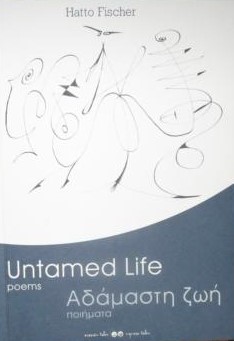
Untamed Life – Αδάμαστη Ζωή Ordering of book / Bestellungen:
"Politeia" https://www.politeianet.gr/ Poetry Connection: Poets and the Olympic Truce 2004 In Search for Peace, Marsaxlook, Malta 7.Sept. 2014 The poem "Silence" by Dileep Jhaveri, written on Feb. 24th 2016, followed The poem 'democracy' Poesie und Philosophie - der Bogota Vortrag 2016 |
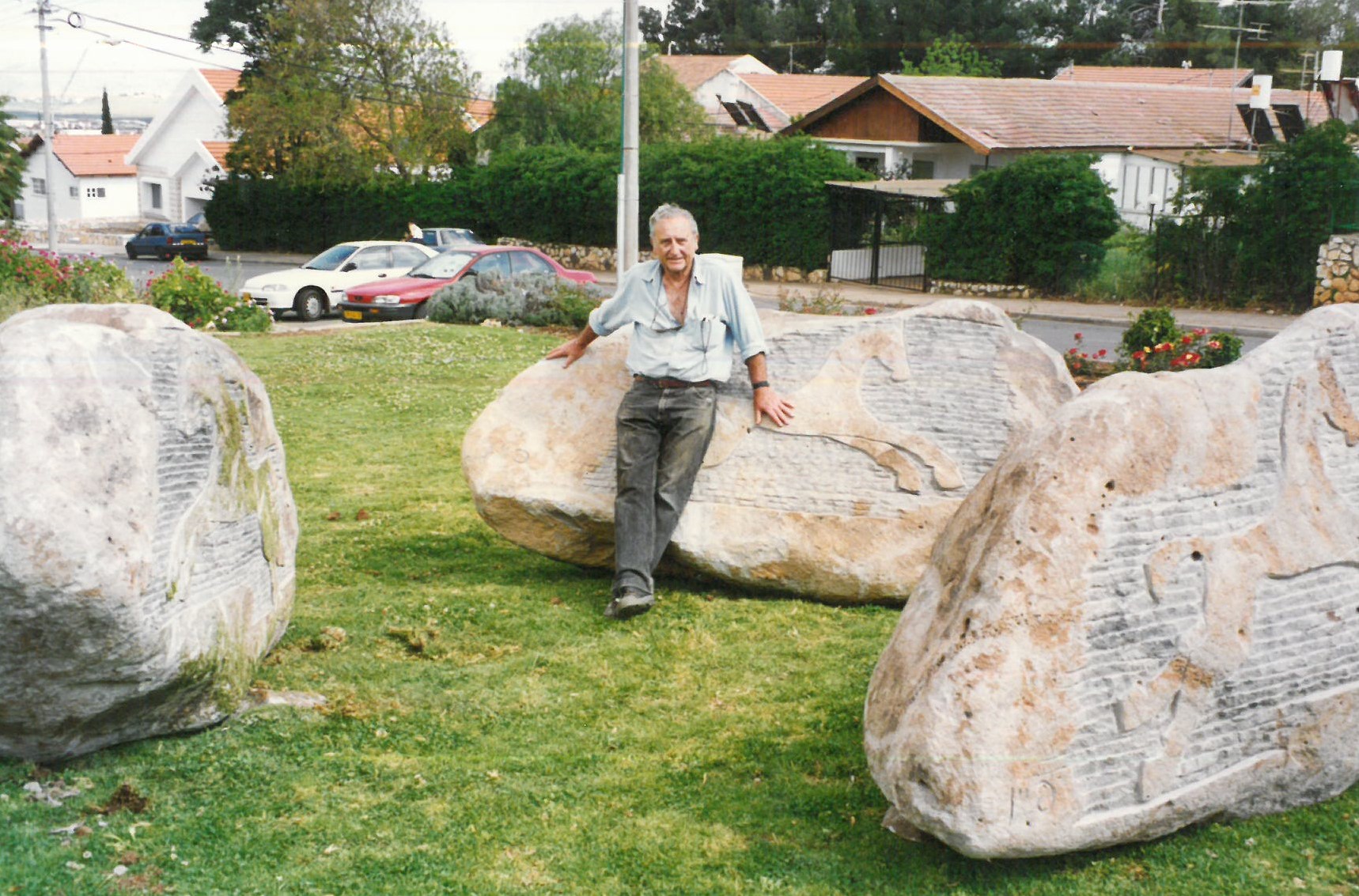
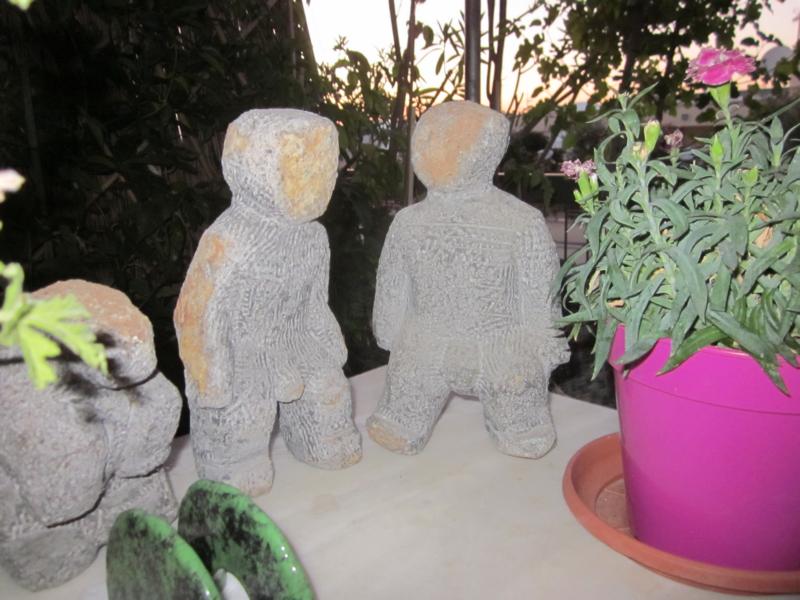
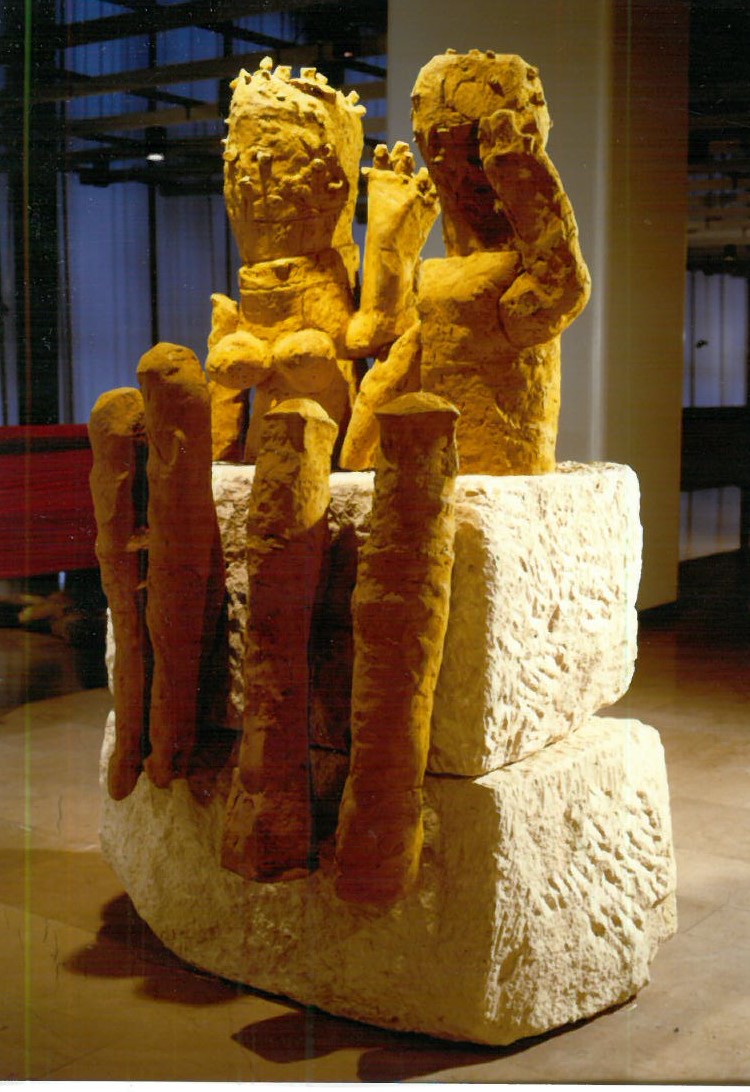
Sculptures by David Fine
David Fine Horses
Part of a set of four men surrounding a lamb for sacrifice Works by Azade Köker
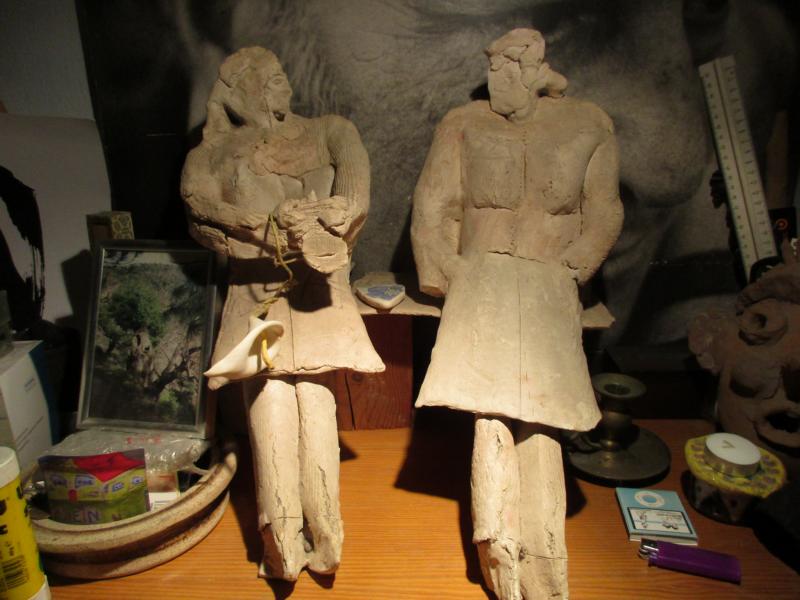
Azade Köker Zwei Frauen auf einer Bank 1979
Azade Köker Voyage in Time / Reise in der Zeit
|
|
GreeceThe children of the Memorandum experience no longer early adulthood, for the transition from a life with promises for the future to a life in misery understood not in an abstract, but concrete sense from child/youth to being the elderlies of society has been captured in one poem. The Way We Live NowThe way we live now is Vasia Tzanakari The Bogota lecture by Hatto Fischer about the relationship between Greece and Germany |
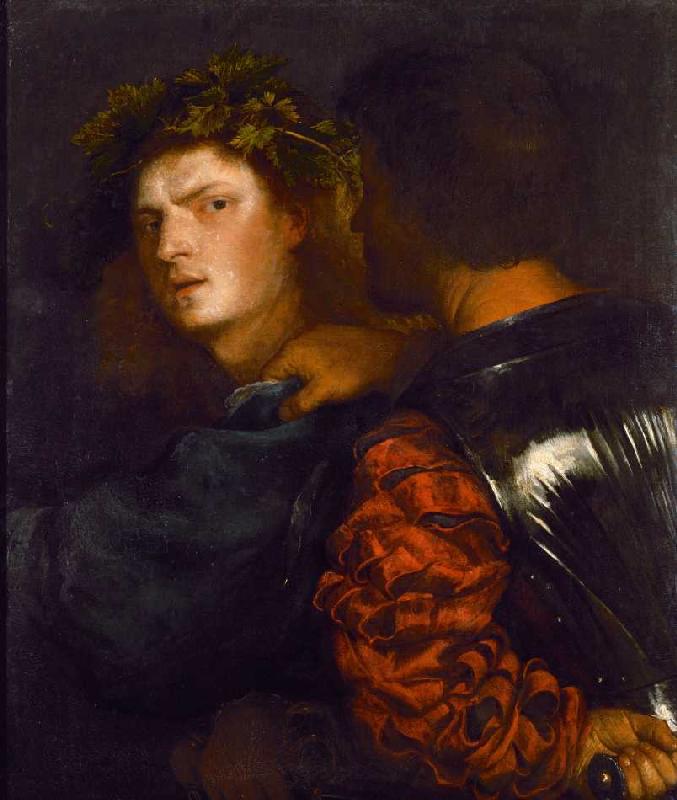 Titian, il Bravo
.png)
Conferences 2017
A Soul for Europe @ iwEU: jien l-Ewropa/aħna l-Ewropa
26 January 2017 (Valletta, Malta) "A Soul for Europe" will be participating in the cultural programme for the Malta EU Presidency 2017. MEP Therese Comodini Cachia is hosting two prestigious events for the cultural programme in the framework of 2017 Maltese Presidency of the Council of the EU. “Forum Valletta” consists of a series of provocations and reactions addressing issues of cultural governance and public engagement followed by a debate involving artists, scholars, cultural critics, and the general public. The Forum will look at a how cultures, people, cities, and regions function in relation to each other and how these  generate systems of governance which in turn determine the lives of people and the places they inhabit. Entrance to the iwEU events is free.  To book send an email to therese@comodinicachia.eu Further information at www.comodinicachia.eu/iweu

8-10 Feb.  LA RENCONTRE DE BRUXELLES:WHAT KIND OF EUROPE FOR THE FUTURE? http://www.likeculture.eu/actualite/la-rencontre-de-bruxelles

Europe of insiders; Europe of extremes; Europe of crises; Europe of finance... Are those the kinds of Europe we really want: a ran-down ideal which is not in adequacy with the realities of European territories any more? Of course, LIKE wants to be at the heart of Europe ; but what kind of Europe are we really talking about?

30 June - 1 July 2017 International NGO Forum on World Heritagein Krakow, Poland
The Forum will follow three International NGO Fora held in St. Petersburg in 2012, in Bonn 2015, and in Istanbul 2016. Please send your full paper by 25 March 2017 to contact@world-heritage-watch.org in English, German, Russian or Spanish language.


BRIDGE: The Heritage of Connecting Places and Cultures
Dates: 6-10 July 2017
City, Country: Ironbridge Gorge World Heritage Site, Shropshire, UK
Bridges physically and symbolically connect places, communities and cultures; they remind us of division while at the same time providing the means for unification. This conference seeks to explore heritage of bridges –not only as remarkable physical structures connecting places and cultures but also as symbolic and metaphorical markers in the landscape. Please see the website for full details and call for papers. Organisers: Ironbridge International Institute for Cultural Heritage (University of Birmingham), Collaborative for Cultural Heritage Management and Policy (University of Illinois) Web Link: www.bridgeconference.wordpress.com


2018
The 2018 ATLAS Transdisciplinary- Transnational-Transcultural (T3) International Conference (June 3-7 2018, Babeș-Bolyai University of Cluj-Napoca, Romania) program consists of invited and selected papers for 12 round tables emphasizing transdisciplinary, transnational and transcultural global problems.The general theme of this conference is ''Being Transdisciplinary". Plenary sessions and keynote panels will be presented. 12 round table discussions on specific TD topics will also be organized. All selected contributions will be published in the book "Being Transdisciplinary". Conference website: http://www.atlas-conference.org
The programme of the keynote sessions and roundtables is available at http://www.atlas-conference.org/images/ATLAS-FINAL-PROGRAM.pdf
Publications by POIEIN KAI PRATTEIN
Catalogue "Imperishable Water", 2012 with Haroula Hadjinicilou, Anna Arvanitaki, Hatto Fischer (ed.), Athens ISBN 978-618-80160-0-2
Hatto Fischer: The poem 'Destiny still flows' by Katerina Anghelaki Rooke - this concerns a discussion of the poem which inspired the action on Rhodes last year
 "Nation and Identity" by Kreisau-Initiative, with introduction by Hatto Fischer is crucial for answering the question whether or not Patriotism is an alternative to Nationalism. Youth met first in Kreisau, Poland and were inspired by this example set by the Kreisau Circle which went into resistance against Hitler on the basis of a non discriminatory approach for the day after Hitler fell.
Article by Anna Arvanitaki and Haroula Hadjinicolaou, "Action on Rhodes" in Journal "Nissides" (small islands). Rhodos, Vol. 9, 2012
The poem "strong images" by Hatto Fischer was published on August 18, 2015. See http://labloga.blogspot.com/search?q=hatto+fischer.

Poiein kai Prattein is member of the Mediterranean Directory organized by the
René Seydoux Foundation
http://www.fondation-seydoux.org/repertoire_presentation.htm
Mediterranean Directory

Currently a group of poets with Yiorgos Chouliaras and Hatto Fischer as editors are preparing a READER about Greece to be published by Paperwall, Mumbai, India in 2016.
Kultur Kalendar / Cultural Calendar for 2017
Eröffnung einer Sonderausstellung am 20. Januar um 14:00 Uhr im Haus der Wannsee-Konferenz. Die Ausstellung erzählt vom großen Engagement einzelner Menschen und Initiativen für eine angemessene Erinnerungskultur in West-Berlin. Sie wird für ein halbes Jahr in der Gedenkstätte zu sehen. Photograph: Andreas Lang
|